
University Buildings and Facilities
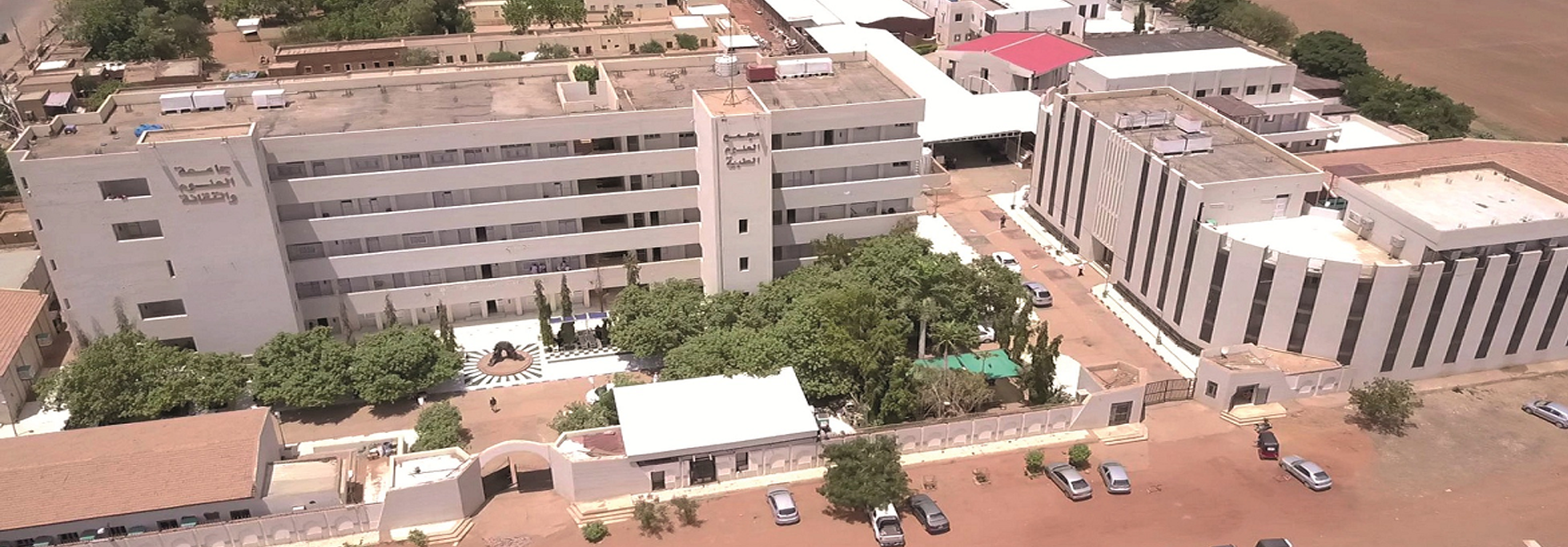
The University’s buildings include 108 lecture halls, 84 laboratories serving the Faculties of Medical Sciences, and 34 laboratories serving the Faculties of Engineering and Computer Science, and Information Technology, located in the Western Compound. This compound also houses the computer centers, the main library at Shankiti, the medical museum, and the morgue, which was built according to international standards. Additionally, the Dentistry Hospital in Northern Omdurman is considered one of the city’s prominent landmarks.
University Environment
After the completion of the infrastructure under the precise supervision of the University administration, the campus buildings were equipped with lecture halls and laboratories, along with all necessary teaching tools. The University established the basic academic foundations for its existing faculties as well as for projected future faculties. Libraries were provided in both traditional printed and digital formats, equipped with modern computers and internet access.
The University also focused on creating an optimal campus environment, including landscaping, gardens, and shaded areas. Cafeterias provide high-quality services to students, and water coolers are distributed across the campus. Sports facilities include basketball, volleyball, football, and billiards courts. Ample space is allocated for theaters that host student activities and creative performances, as well as music and art rooms. These facilities aim to support students’ comprehensive academic development while nurturing creativity in artistic, cultural, athletic, and social areas.
Development Timeline
The University of Science and Technology was established to expand education in computer and applied sciences, starting with programs in Information Technology, Computer Science, and Computer Engineering (later renamed Electrical and Electronic Engineering) with its four departments: Communications, Biomedical Engineering, Electronic and Computer Systems, and Software Systems. Subsequently, medical laboratories and medical programs were established. The medical sciences cluster was further developed with the creation of Dentistry and Pharmacy programs.
Following this, the Architecture and Urban Engineering program was established, now part of the Faculty of Engineering, followed by the Business and Administrative Sciences programs. To strengthen its connection with society, the University introduced intermediate diploma programs in its early years, later renamed Technical Studies and Community Development.
To meet evolving academic needs, the University established the Faculty of Postgraduate Studies and Academic Development, along with specialized professional centers, including:
Since its establishment, the University has followed a clear and structured path. Today, it operates through four integrated campuses extending across the main entrance of Thawra City in Northern Omdurman, along major streets westward (Shankiti Street, Al-Nas Street, and Al-Wadi Street) and eastward. These four campuses are:
 العربية